
FOR THE FIRST TIME IN THE LUGANO REGION
Turkish fascination
in Mozart’s time
In the second half of the eighteenth century, Vienna increasingly turned its gaze toward the East. Fascination with the Ottoman world spread through musical theatre, fashion, decorative taste and even orchestral language: percussion, marked rhythms, sudden flashes of sound and unusual colours gradually entered European music, transforming themselves into an imagined, theatrical and seductive Orient.
This was not an authentic reconstruction of Turkish music, but rather a fantasy of elsewhere. The Ottoman Empire became, for the Viennese world, a presence both close and mysterious: something that fascinated, unsettled and ignited the imagination of composers. “Alla turca” culture rapidly invaded not only musical theatre, but also decorative taste, fashion and even daily life in imperial Vienna. The East was observed, reinvented and transformed into a sonic image: not historical reality, but a fantastical space within the European imagination.
Wolfgang Amadeus Mozart was among the composers who most intensely transformed this fascination into music. The famous Turkish March, The Abduction from the Seraglio, the “alla turca” Rondo of the K. 219 Concerto, and even the oriental disguises of Così fan tutte reveal how deeply this imagery had entered Viennese culture of the time. In Vienna, people dreamed of Constantinople without ever truly having seen it: the sound of the Janissaries, exotic percussion and the allure of distant worlds became theatre, elegance and musical invention.
Yet tonight’s programme deliberately follows a different path.
It does not merely evoke the Turkey imagined by eighteenth-century Vienna, but seeks a more direct encounter between different musical sensibilities. The perspective gradually changes: from the Orient fantasised by Viennese culture to a real, contemporary and living Turkish musical presence.
Eine kleine Nachtmusik represents one of the brightest images of Viennese Classicism. Behind its apparent simplicity lies writing of extraordinary perfection: every phrase seems to arise naturally, every balance appears spontaneous, every movement preserves a lightness that never loses precision or elegance. It is music built upon the pleasure of dialogue, the clarity of form and the continuous fluidity of musical motion.
Yet even here, transparency of writing never means superficiality. Mozart succeeds in transforming apparent simplicity into an almost perfect form of balance, where everything seems to move with complete naturalness while remaining constructed with rigorous precision. The music thus preserves an immediate, theatrical and communicative vitality without ever losing refinement.
The Flute Concerto in G major instead reveals a more lyrical and transparent Mozart. Flute and orchestra converse with naturalness and expressive freedom, transforming musical discourse into luminous and elegant writing. The solo instrument never seeks mere spectacular virtuosity: its song seems instead to arise directly from the breath of the musical phrase, always maintaining a soft, fluid and deeply human quality.
Behind the serenity of the concerto, one also perceives Mozart’s extraordinary ability to create balance without rigidity. Everything appears free, spontaneous and inevitable, as though the musical discourse were unfolding naturally before the listener. Even in the most brilliant passages, a lyrical quality always remains, preventing the writing from becoming a simple display of technique.
It is precisely at this point that the concert changes perspective.
With Zulül by the Turkish composer Kenan Durul, we hear a real, living and contemporary Turkish musical voice. Fresh, joyful and vibrant, this work introduces a different relationship with rhythm, dance and folk colour, bringing into the concert an immediate and communicative energy shaped by movement and collective impulse.
After the Turkey imagined by eighteenth-century Vienna, a musical presence emerges that no longer arises from fantasies of exoticism, but from a tradition lived from within. Dance, rhythm and collective gesture acquire here an extremely natural and direct dimension, suddenly transforming the concert into a real meeting place between different musical cultures.
The conclusion with Symphony No. 39 by Franz Joseph Haydn leads the programme toward a more restless and intense dimension. Far removed from the salon-like image often associated with Classicism, this work reveals an energetic, dark and surprisingly theatrical Haydn. Harmonic tensions, sudden dynamic contrasts and rhythmic force constantly run through the writing, revealing a musical language that is restless, mobile and strikingly modern.
While preserving formal clarity and architectural balance, Haydn introduces a continuous inner tension. The music seems to move through sudden contrasts, dramatic openings and unexpected rarefactions of sound. Here too, Viennese Classicism appears anything but static: a living musical language crossed by energy, transformation and continuous expressive exploration.
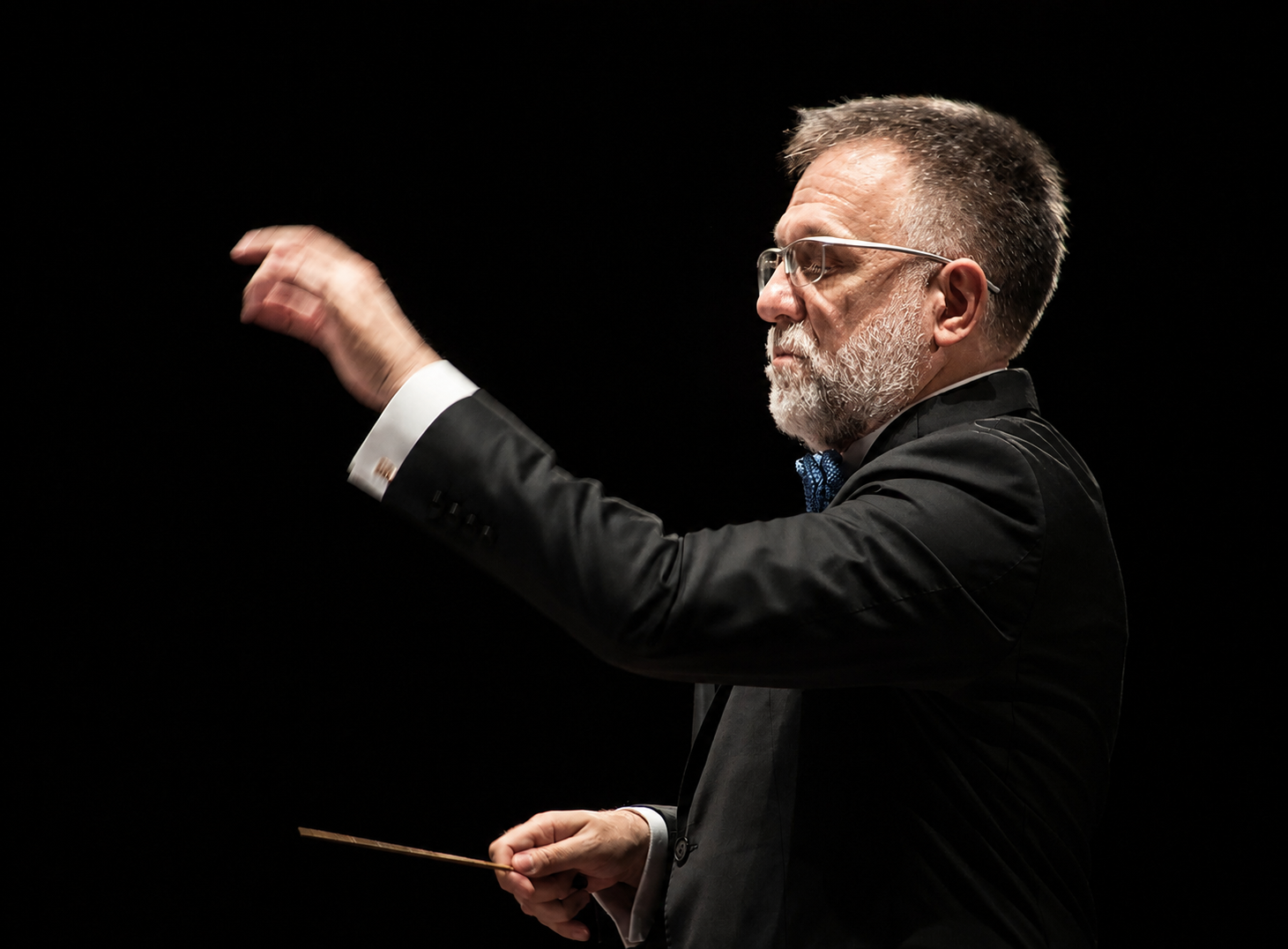
Bringing this musical journey to life is the Turkish conductor Hakan Şensoy, a figure of major international importance and the only conductor in Turkish musical history to have conducted at Milan’s Teatro alla Scala. Educated between Istanbul and London’s Royal College of Music, Şensoy combines the solidity of the European tradition with a sensitivity deeply connected to Mediterranean and Eastern musical culture. It is precisely this dual identity that makes the dialogue between Viennese Classicism and the Turkish resonances of the programme feel especially natural.
In his musical interpretation, formal precision, freedom of phrasing and constant attention to orchestral colour coexist. The result is not a simple contrast between different worlds, but a search for continuity and mutual transformation, in which apparently distant languages suddenly begin to converse with complete naturalness.
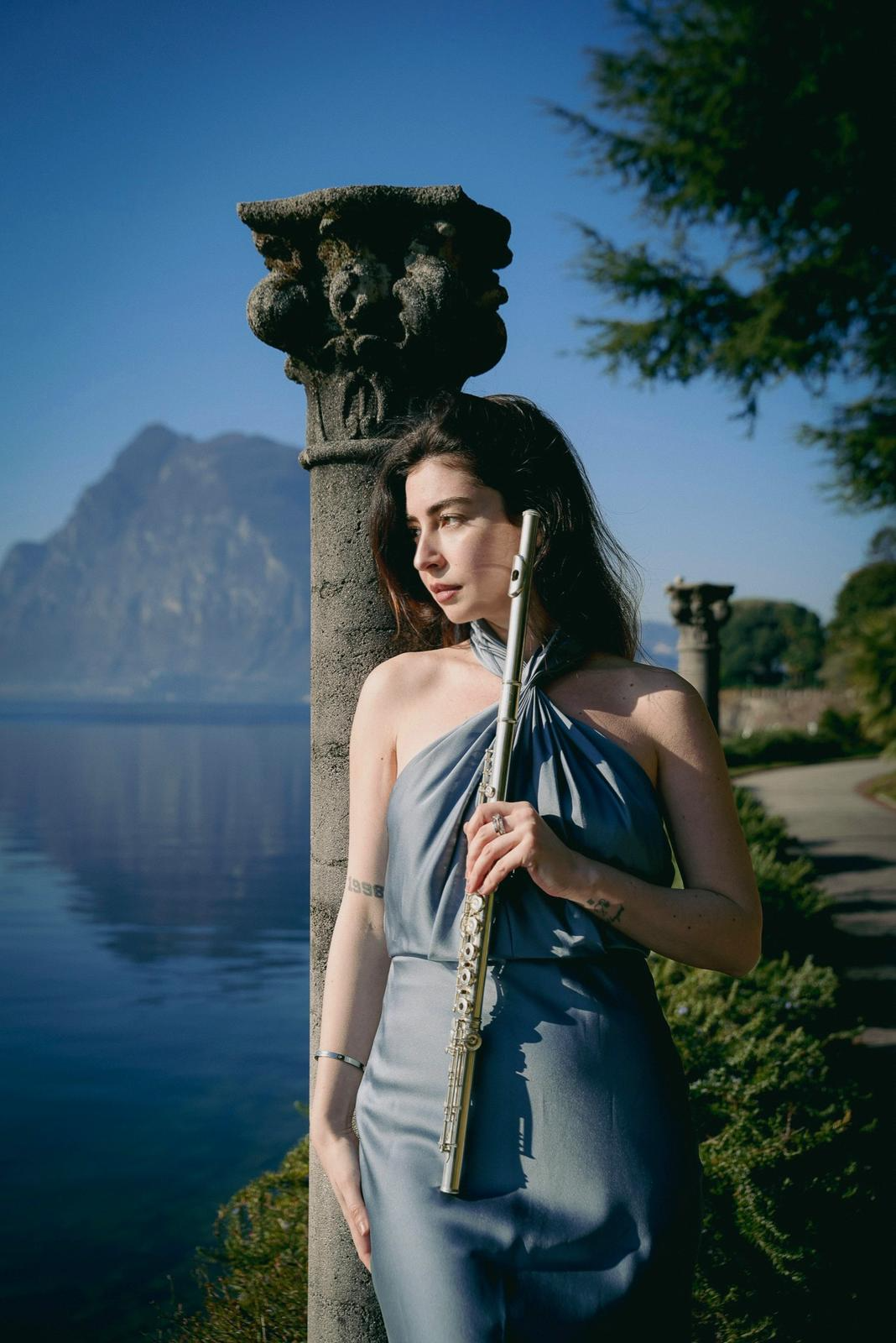
Beside him, the young flautist Zeynep Canay represents a special connection with the Italian-speaking region of Switzerland. Born in Ankara and educated between Turkey and Switzerland, she continued her studies at the Conservatorio della Svizzera Italiana in the class of Andrea Oliva, distinguishing herself through musicality, elegance of sound and a natural expressive presence. Her participation thus creates yet another bridge between cultures, artistic paths and different educational traditions.
Viennese Classicism therefore appears not only as balance and proportion, but also as curiosity, openness and the continuous transformation of musical language. A tradition capable of absorbing distant influences, reinventing them and transforming them into new forms of sonic dialogue.
In the heart of Paradiso, between the contemporary architecture of the municipal building, the sculptures of Ivo Soldini and the profile of Monte San Salvatore, Piazza del Municipio welcomes this concert as a meeting between Viennese elegance and Mediterranean fascination. An open space where the sound of the strings, the rhythm of the music and the light of evening seem naturally to merge with the landscape of the Ceresio, transforming listening into a shared experience between history, place and musical imagination.
BIOGRAPHIES
Hakan Şensoy
Violinist and conductor born in Istanbul, Hakan Şensoy is an important figure in contemporary Turkish musical life. Founder and artistic director of several ensembles, including the Istanbul Chamber Orchestra, Filarmonia Istanbul and the Aromsa Chamber Orchestra, he has been principal conductor of the Izmir State Symphony Orchestra and a teacher at the ITU Turkish Music State Conservatory. His activity combines symphonic and chamber repertoire, the promotion of contemporary Turkish music and attention to the training of young musicians.
Zeynep Canay
Born in Ankara, Zeynep Canay completed her musical training in Turkey and Switzerland, earning her Master’s degree at the Conservatorio della Svizzera italiana in the class of Andrea Oliva. She later attended the Galway Flute Academy, where Sir James Galway named her a Rising Star. As a soloist and chamber musician, she has performed throughout Europe, Asia and the Americas. Highlights of her career include a solo appearance at the KKL Luzern with Festival Strings Lucerne under the direction of Daniel Dodds. Her artistic path forms a meaningful bridge between the musical tradition of Italian-speaking Switzerland and an international concert career.