
TICINESE EXCELLENCES
Composing music
dreaming with open eyes
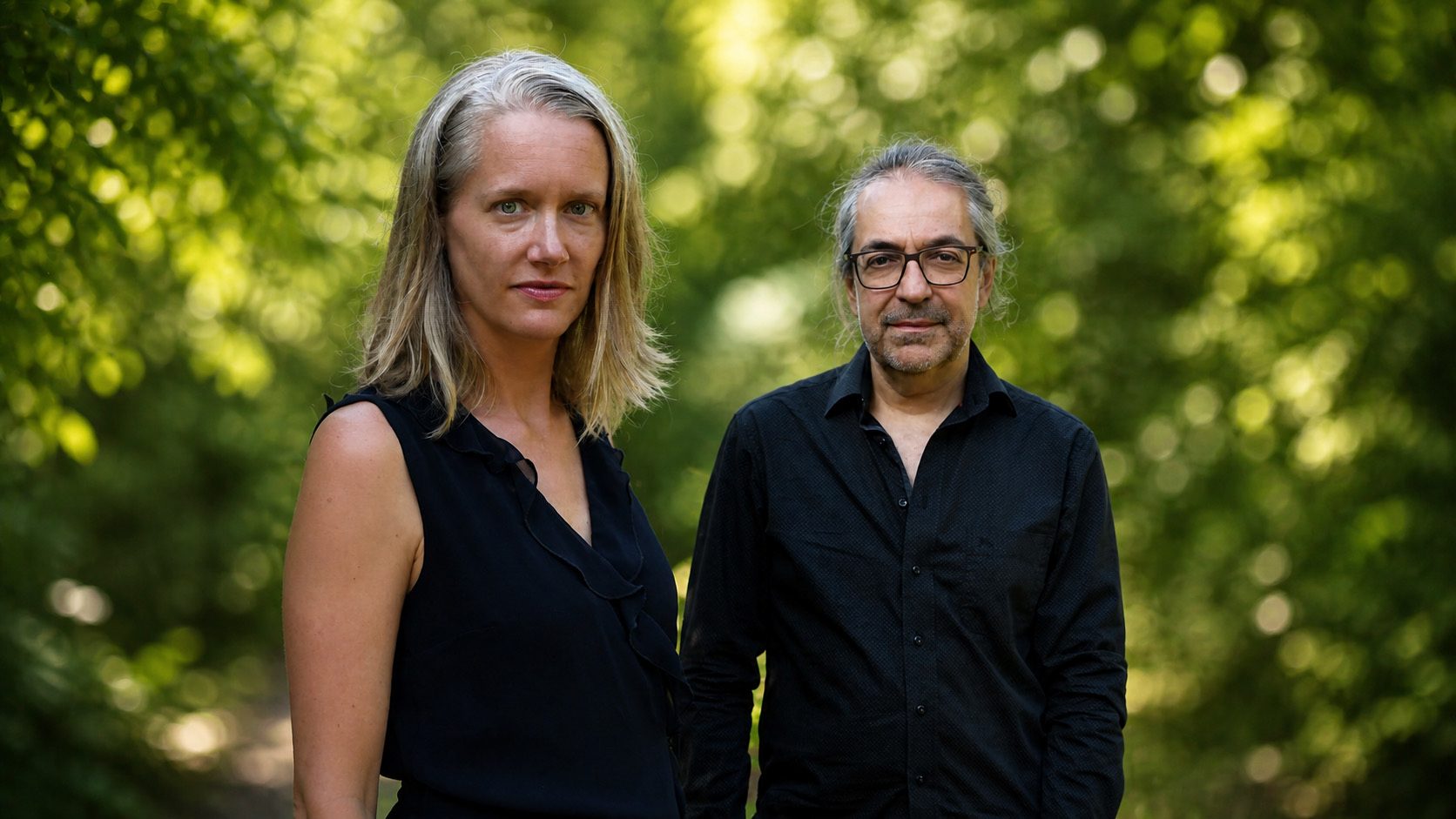
The musical journey of Marco Santilli has developed over the years along a personal and immediately recognisable line, in which writing and improvisation coexist without hierarchy. Trained between Zurich and Lausanne, he has built a language that crosses several traditions without ever belonging entirely to any of them.
His creative process may perhaps be summed up in two words: dreamlike jazz. A suspended condition, almost a form of lucid trance, in which composition takes shape like a dream experienced with open eyes. Within this space, music is never completely fixed nor completely free: the written page and improvisation naturally merge, giving life to a continuous, mobile and unpredictable flow.
The programme is thus constructed as a succession of sonic images, each crossed by its own evocative centre.
L’occhio della betulla (“The Eye of the Birch”) is born from a silent presence observed through a window: the trunk seems to return one’s gaze. Curéija du drèisc, “dragon’s belt”, instead takes the dialect name for the rainbow and transforms it into a sonic narrative. La panchina parlante (“The Talking Bench”) suggests a meeting place for those who feel alone, and the music gathers itself as though searching for a quiet voice.
With I’ve never played in Bern, an ironic vein emerges, linked to the idea of belonging — or perhaps not belonging — to a precise genre. Indaco instead explores an ambiguous and elusive colour, probably the most indecipherable of the rainbow, while Luce di lei looks toward the tradition of Neapolitan song through a suspended and contemporary sensibility.
Even Agasul, an exotic-sounding name for a district of Illnau-Effretikon, opens the doors to an imaginary folklore: not something to reconstruct faithfully, but to reinvent freely through sound.
At the centre of the programme, the four movements of Repetita iuvant revolve around an idea of synthesis: saying less, removing, leaving space. A tribute to silence as a necessary condition for listening, in a reality where people often speak far more than they are truly capable of hearing.
The journey concludes with Tangu da Wassen, which ironically reworks an expression from the Upper Leventina linked to Swiss-German folk music, transforming it into a musical object suspended between memory, distance and reinvention.
Beside Santilli, Karolina Öhman brings a complementary and decisive presence. The name of the project, Karmar, meaning “frames” in Swedish, discreetly refers to her origins while also suggesting a broader image: the compositions become open spaces capable of welcoming sonic landscapes, evocations and fragments of narrative.
Hosting this encounter is the Church of San Cristoforo near the lake: a place that unites intimacy and openness, historical memory and the breath of the landscape. The current building dates from the seventeenth century and was constructed beside a chapel now incorporated into the sacristy. The interior preserves Baroque stuccoes and frescoes by Adelchi Maina, who was born in the village, while the façade dedicated to the saint is marked by the polychrome mosaic of Aurelio Gonzato.
Within this space, just a few steps from the Ceresio, music finds an ideal frame: a church that is intimate but not closed, close to the water, the village and the landscape. A place where listening becomes more inward and where the sonic images of the programme seem naturally to converse with the evening lights of the lake.
BIOGRAPHIES
Marco Santilli
Ticino-born clarinettist, composer and improviser Marco Santilli studied at the conservatories of Zurich and Lausanne, also obtaining the Premier Prix de Virtuosité. Active between classical music, jazz and contemporary creation, he has for years developed a personal language based on the encounter between written music and improvisation, which he himself defines as “dreamlike jazz”.
Karolina Öhman
Swedish-Swiss cellist Karolina Öhman studied with Thomas Grossenbacher, Thomas Demenga and Torleif Thedéen. She is principal cellist of the Kammerphilharmonie Graubünden and is distinguished by an intense activity in contemporary music, with more than two hundred world premieres. She regularly performs as a soloist and chamber musician in Switzerland and abroad.